
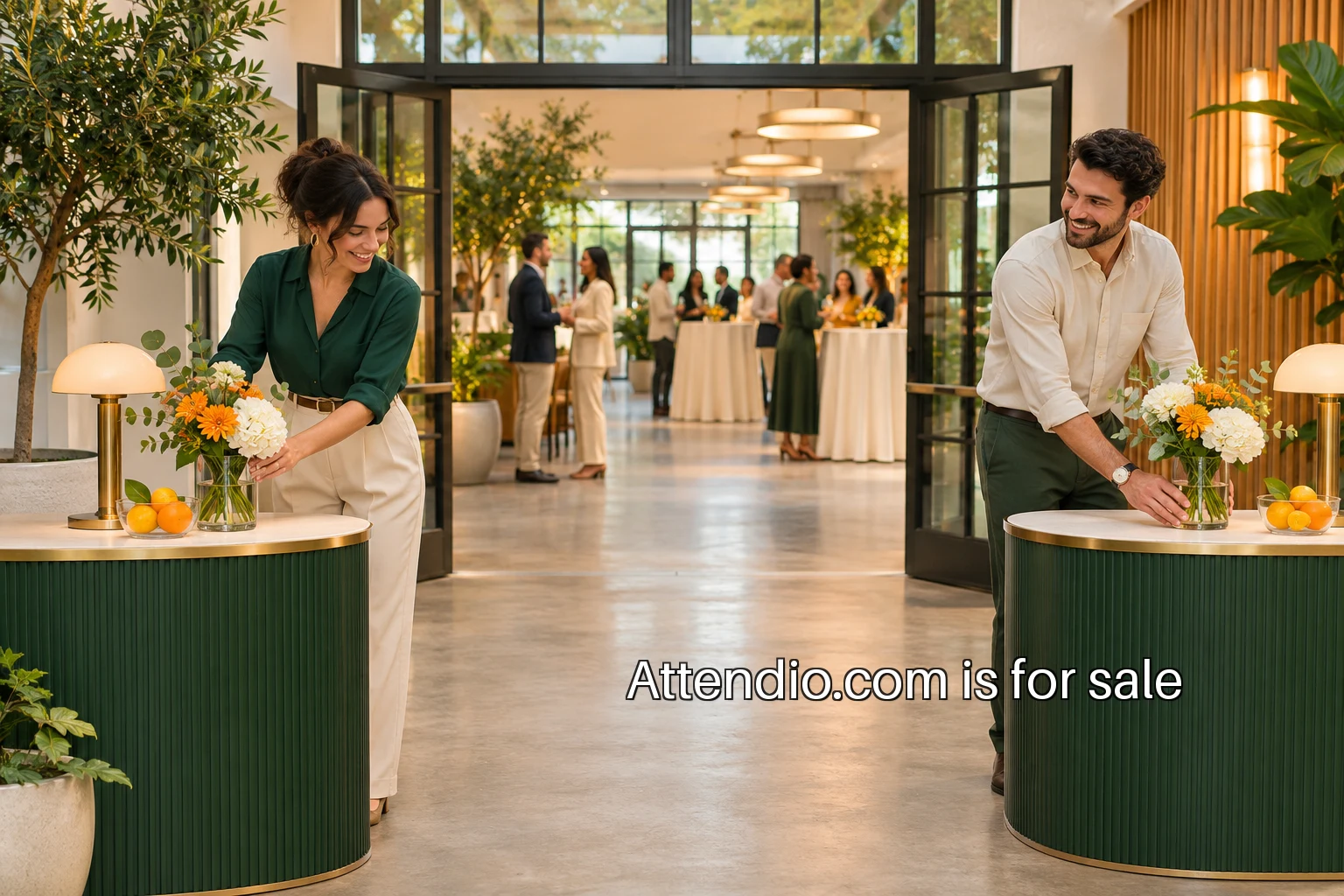
Treat arrival as its own part of the event
A guest can have a useful invitation and a confirmed place while still being unsure what to do on arrival. Which entrance is open? Is there a queue for people who already registered? Where should a speaker go? An arrival plan answers those questions before the first guest reaches the door. It gives the team a common sequence to follow during a period when several things may happen at once.
Start with a small event you can describe precisely: the expected number of people, the entrance they will use, the arrival window and the people available to help. A breakfast for forty guests needs a different plan from a conference with several hundred arrivals. The method is the same in both cases. Walk the route as a guest, list each decision they must make and decide who or what will answer it.
Walk from the street to the first seat
Begin outside the venue. Check how the entrance looks from the direction guests are likely to approach. A building may have more than one door, and the address on the invitation may lead to a reception desk that closes before the event begins. Ask the venue team to show you the route that will actually be available. Record the details in the guest instructions and the host briefing.
Continue through the entrance to registration, then to the room, toilets and any refreshment area. Note where a sign, a person or a short instruction would help. Avoid assuming that a familiar venue is familiar to everyone else. An organizer who has visited repeatedly can overlook a confusing turn. Ask someone who has not been involved in planning to follow the route and tell you where they hesitate.
Access information needs the same attention. The W3C checklist for accessible events covers matters including accessible entrances, meeting rooms and routes. Use it as a planning reference and confirm the venue's actual arrangements. Give guests a clear way to request information before arrival so that an unanswered question does not become a problem at the door.
Write the message guests will use that morning
An arrival email should be useful on a phone. Put the date, start time, exact venue and entrance instruction near the top. Explain whether guests need a ticket, a confirmation code or simply their name. Include a practical contact route and any important information about access. A long promotional introduction makes it harder to find the details a person needs while standing outside.
Read the message as someone who has forgotten the earlier invitation. Can they find the place and understand the first step without searching another email? Check every link. If a map is included, make sure its destination matches the entrance instruction. A concise message with accurate details can remove several questions from the host's morning.
For a fictional eighty-person workshop, the message might say that the garden entrance opens at eight thirty, check-in is by name and the first session begins at nine. It could explain the accessible route and name the person to contact for help. The details will vary by venue, but each sentence should answer a real arrival question.
Give the welcome team clear roles
A small event may need one person to welcome arrivals and another to handle exceptions. Larger events may separate directions, check-in and speaker support. Assign roles according to the likely work, then make sure everyone knows who can resolve a problem. The team should not have to debate authority while a guest waits.
Brief the hosts before arrivals begin. Show them the room, the route and the list they will use. Practice finding a name, correcting a typo and dealing with someone who is not on the list. Explain what to do with an early arrival, a guest who needs assistance and a speaker whose registration was made by someone else. Rehearsing ordinary exceptions makes the briefing concrete.
Give the team a simple way to communicate that does not require shouting across the entrance. The method can be as modest as a designated person within sight, provided the roles are clear. Keep the organizer available for decisions that only they can make, while allowing hosts to resolve routine cases within agreed boundaries.
Separate a queue from a problem
Some guests need only a quick check-in; others need a longer conversation. Plan where the longer conversations will happen so they do not block the main route. A nearby help point may work, but it must be visible and staffed. Moving a person out of a queue without giving them a clear next step merely relocates the confusion.
Observe the space before deciding where to place the table. Check whether people can pass, whether doors remain clear and whether the host can see approaching guests. Work with the venue on safe movement and capacity. A neat-looking registration station is less useful if it creates a bottleneck immediately inside the entrance.
Prepare for the unhelpful morning
Assume that something ordinary may fail: a device runs out of power, connectivity drops or an updated list is missing. Decide what the host can do in each case. Test the fallback with the actual team rather than keeping it as a note in the organizer's head. If a printed or offline list is used, handle it according to the event's privacy practices and collect it afterward.
A fallback also needs a reconciliation step. If arrivals are recorded in a second place, someone must bring those records together when normal service resumes. Name that person and define how duplicates will be handled. The point is to keep welcoming guests while preserving a record the organizer can understand later.
Review the experience while it is fresh
After the main arrival period, ask the hosts where they had to improvise. Record the recurring questions, the exceptions and any point where a guest was sent to the wrong place. Invite feedback from the venue team as well. Their perspective may reveal a route or timing problem the registration team did not see.
Use the review to change the next arrival plan. A better entrance instruction, a different briefing example or a clearer help role may solve more than a new tool. A strong arrival plan is specific enough to rehearse and simple enough to use under pressure. It lets the team spend less time deciding what should happen and more time giving each guest a proper welcome.